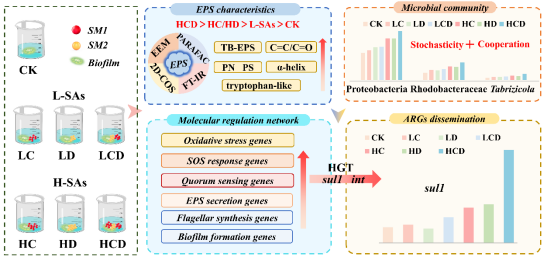
Biofilms serve as ecological niches for antibiotic exposure and reservoirs for antibiotic resistance genes, playing a critical role in antibiotic resistance genes dissemination. Herein, we show that combined high-concentration sulfonamides enhanced the antibiotic resistance genes dissemination potential in biofilms by reshaping extracellular polymeric substances and microbial communities. Combined high-concentration sulfonamides enhanced the secretion of tightly bound extracellular polymeric substances, increasing the contents of hydrophobic moieties and protein-rich components. From a microbial perspective, combined high-concentration sulfonamides promoted the enrichment of extracellular polymeric substance-producing taxa, which also harbored upregulated antibiotic resistance genes (sul1 and golS). These changes jointly promoted the antibiotic resistance genes dissemination potential, which were simultaneously regulated by functional genes associated with oxidative stress, the SOS response, quorum sensing, flagellar biosynthesis, extracellular polymeric substances secretion, and biofilm formation. These findings reveal how extracellular polymeric substances and microbial community jointly drive antibiotic resistance genes dissemination in biofilms, offering important references for antibiotic resistance genes pollution control and ecological risk assessment.