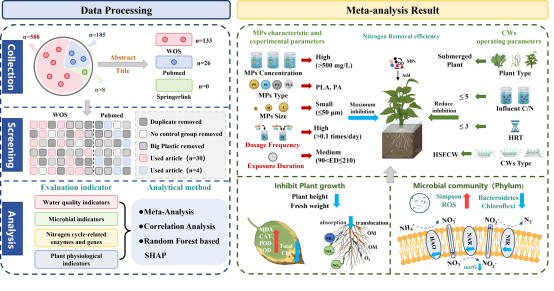
Constructed wetlands (CWs) are an effective wastewater treatment system and an important sink for microplastics (MPs). However, MPs impacts on nitrogen removal performance of CWs remain unclear. Here, we collected 1,903 datasets from 34 studies for a meta-analysis to explore MPs effects on nitrogen removal performance of CWs from characteristics and experimental parameters of MPs. The results showed that dosage frequency and exposure duration of MPs were the main influencing factors, and there was a positive interaction between them. MPs affected nitrogen removal performance of CWs by altering metabolic activities of microorganisms and plants. MPs reduced the relative abundance of Chloroflexi and Bacteroidetes in nitrification or denitrification processes. MPs affected the denitrification process by reducing NIR and NAR activities, and narG abundance, while influencing the nitrification process by reducing HAO activity. Furthermore, MPs trigger oxidative stress and reduce chlorophyll content and plant biomass, hindering nitrogen absorption and thus decreasing nitrogen removal performance of CWs. Meanwhile, operational parameters of CWs, such as influent C/N, CWs type, plant type and hydraulic retention time (HRT), also affected nitrogen removal performance of CWs. The horizontal subsurface flow CWs with a mixed planting mode, which regulates the appropriate HRT and influent C/N, may effectively reduce the impact of MPs on the nitrogen removal performance of CWs. This research will enhance the understanding of the impact of MPs pollution on nitrogen removal performance of CWs, providing scientific and reliable reference opinions for stable operation management of CWs under complex pollution loads in the future.